


Better Ways to Cope
Building Communities. Touching Lives. Healing Together.
Quick Links



Better Ways to Cope is a movement by the Milwaukee County Department of Health and Human Services that partners with local agencies to provide everyone with the tools to navigate life’s toughest moments. By fostering personal resilience and healthier emotional habits, we empower our community to manage stress, overcome life challenges, and reduce reliance on substances. Our mission is to promote lasting well-being and healthier lifestyles, ensuring that every resident has the support they need to thrive.

Better Ways to Cope Funding Priorities
We are pleased to build upon the values and track record of Better Ways to Cope to meet the serious challenge presented by our county's opioid crisis. Milwaukee County DHHS and Behavioral Health Services (BHS) are committed to championing transformative substance use prevention, harm reduction, treatment, and recovery projects that increase access to life-saving resources and reduce the likelihood that people will die from an overdose. As you embark on the application journey, we invite you to reflect deeply on the following values:
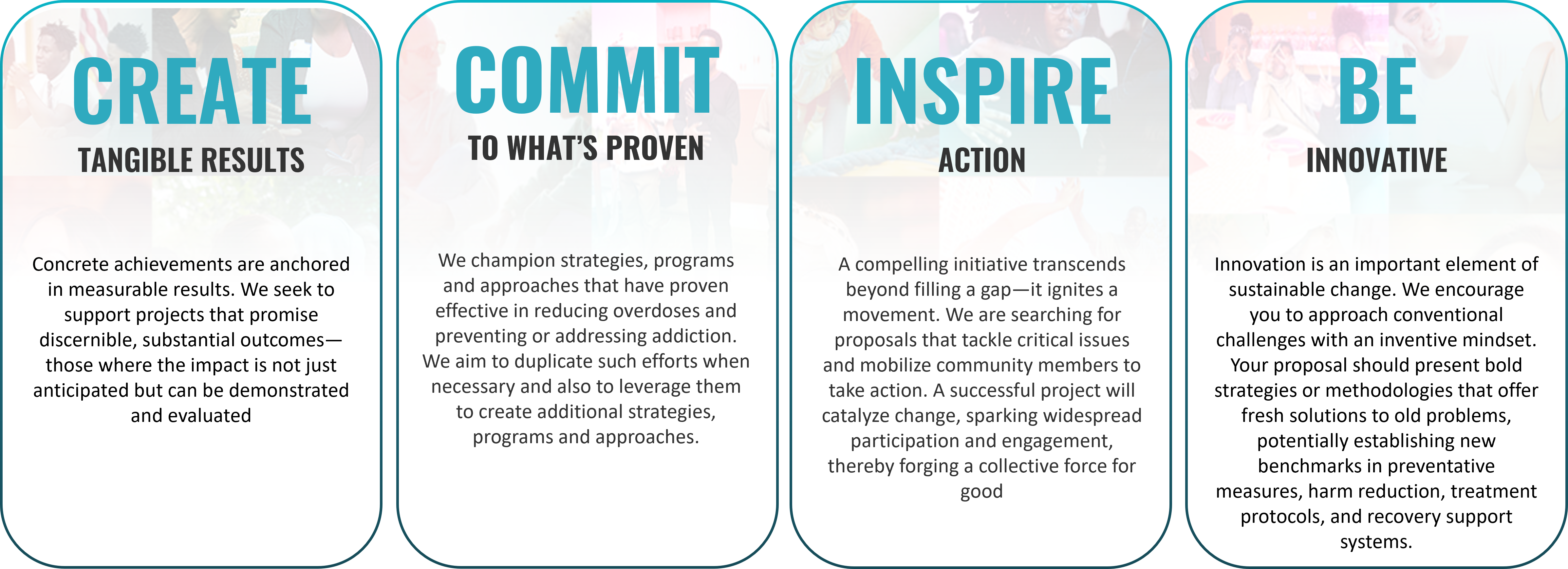
Create Tangible Results: Concrete achievements are anchored in measurable results. We seek to support projects that promise discernible, substantial outcomes—those where the impact is not just anticipated but can be demonstrated and evaluated.
Commit to What’s Proven: We champion strategies, programs and approaches that have proven effective in reducing overdoses and preventing or addressing addiction. We aim to duplicate such efforts when necessary and also to leverage them to create additional strategies, programs and approaches.
Inspire Action: A compelling initiative transcends beyond filling a gap—it ignites a movement. We are searching for proposals that tackle critical issues and mobilize community members to take action. A successful project will catalyze change, sparking widespread participation and engagement, thereby forging a collective force for good.
Be Innovative: Innovation is an important element of sustainable change. We encourage you to approach conventional challenges with an inventive mindset. Your proposal should present bold strategies or methodologies that offer fresh solutions to old problems, potentially establishing new benchmarks in preventative measures, harm reduction, treatment protocols, and recovery support systems

Better Ways to Cope Regranting Process
Better Ways To Cope (BWTC) regranting cycles adhere to a rigorous, standardized application process designed to empower local organizations. The journey begins with the official application launch on the Milwaukee County website, followed immediately by a virtual information session where prospective partners can gain clarity on requirements and ask direct questions. Once organizations submit their proposals by the established due date, every submission undergoes an impartial evaluation; an independent review panel scores each application against objective, predetermined criteria to ensure funding reaches the most impactful initiatives. This structured pathway concludes with the formal selection announcement, where awardees are notified via email, guaranteeing a clear and equitable experience for every agency seeking to collaborate with us.

Application Launch:
The public will gain access to the application and will be invited to apply via the Milwaukee County Website.

Virtual Information Session:
Interested parties will learn how to complete the application and have an opportunity to ask questions.

Application Due Date:
Organizations will submit their applications via the Milwaukee County website.

Selection Announcement:
An independent review panel will rank each application using objective criteria and announce which agencies are receiving awards. Awardees will be notified via email.

BWTC for Families 2027 Application Documents
The documents below outline the essential application materials, financial reporting requirements, and program guidelines for the 2027 Better Ways to Cope for Families initiative. Please note that these resources are specific to the current funding cycle; requirements, forms, and strategic priorities will be updated to reflect new community needs when the next application cycle opens for 2028.
Join the BWTC For Families Information Session
Information Packet Application Program Budget Total Budget
2026 -2028 Information Session Question and Answer
Where can I find the financial reporting document?
A copy of the financial reporting document is available here.
Do Memorandums of Understanding (MOUs) with partners count toward the 8-page narrative limit?
No, MOUs are considered separate from the 8-page narrative limit.
If an organization operates in multiple states, should the submitted budget reflect the entire agency or just Wisconsin operations?
The submission should focus on the budget relevant to operations within the specific region/state designated by the grant.
For a for-profit entity with a shifting budget based on active contracts, what are the expectations for the "Agency Budget" section?
You should provide the revenue and expenses from the previous fiscal year to establish a baseline of financial activity.
What is the expected timeline for payment once an invoice is submitted?
Payment for invoices will typically be received 30 days after the date of submission.
Should staff time spent on monthly financial reporting be categorized as a direct or indirect cost?
Typically, staff time specifically dedicated to the administration of the grant (such as financial reporting) can be categorized based on the organization's standard accounting practices, but it is often considered a direct cost if it is specifically required for the grant’s management.
Is there a specific operating budget requirement for an organization to be eligible?
There is no strictly defined minimum or maximum operating budget required for eligibility.
How does BWTC define "Outcomes," "Goals," and "Objectives" in the program design section?
While definitions can vary by funder, BWTC generally looks for:
-
Goals: Broad statements of what you wish to achieve.
-
Objectives: Specific, measurable steps taken to reach those goals.
-
Outcomes: The final results or changes that occur because of the program.
Are grant dollars restricted to addressing opioid use, or can they address other substances?
While there is a significant focus on opioid prevention, the funds can often be used for broader substance use prevention (i.e. alcohol and marijuana), provided there is a clear connection to how the activities coordinate with or impact the reduction of opioid-related harms or deaths.
Can the budget include costs for internal organizational training?
Yes, costs can include trainings that strengthen the organization’s ability to implement programs, follow best practices, and ensure sustainable outcomes.
If a project falls into more than one category, how should it be submitted?
Each application should focus on and address only one primary category.
What are the chances for a new business or grassroots organization to receive this grant?
The grant is open to a variety of organizations. Successful grassroots projects often utilize evidence-based approaches to prevention while maintaining strong community ties.
Is there a preference for ongoing programs versus singular, time-limited projects?
Awards have historically been a mix of both ongoing programs focused on long-term sustainability and singular projects designed to span the specific funding timeline.
Can organizations apply for more than one category to the website?
Yes
How do I download the budget form?
1. Open Application, scroll to the budget section
2. Open the budget forms embedded in the application
3. Download budget forms
4. Fill in with your budget information
5. Attach the form with your application when you turn it in to Hope House
When will you announce who has been selected to receive BWTC funds?
Better Ways to Cope grantees will be notified of award selections on January 25, 2027 by 5pm.
Download The Better Ways to Cope 2026 Cohort Overview Document
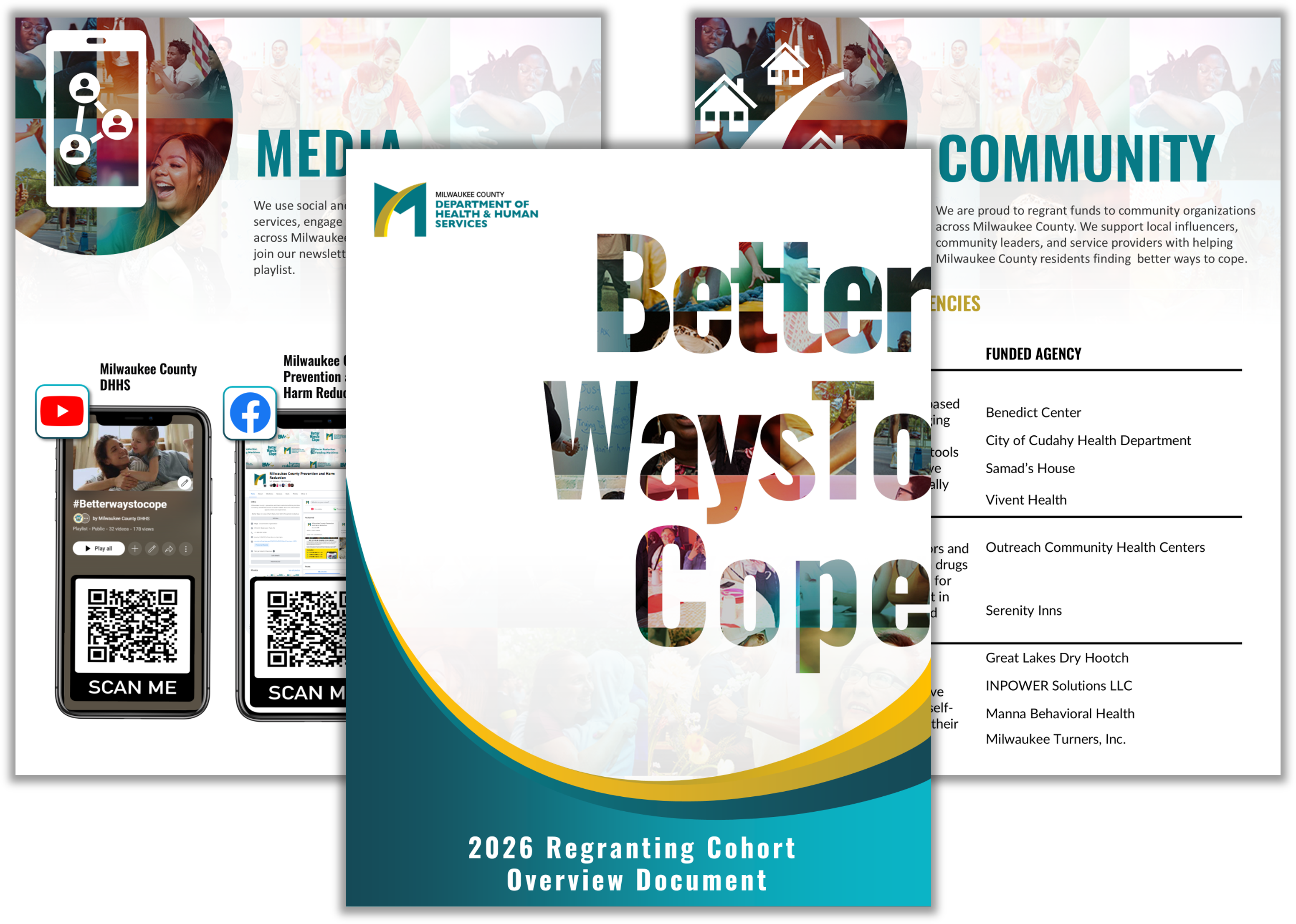
To get things moving, please download and save the 2026 Better Ways to Cope Regranting Cohort Overview. Think of this document as your go-to playbook for the next two years—it’s packed with everything you need to hit the ground running and stay in sync with the rest of the cohort. Make sure to grab it for these three reasons:
- You’ll know exactly what’s expected: It breaks down all the reporting milestones and compliance boxes you need to check to keep your funding smooth and steady.
- You’ll stay connected: It outlines how your specific project plugs into our larger county-wide strategy, helping us all move the needle together.
- You’ll have instant access to tools: It’s loaded with links to branding guides, support channels, and technical resources that save you time and administrative headaches.