


Youth Justice
Supporting our Community’s Youth through Prevention, Diversion, and Intervention
Any Young Person Can Make a Bad Decision. Every Kid Deserves a Chance.
Milwaukee County’s Youth Justice system helps young people and families navigate challenges through a continuum of prevention, diversion, and intervention services. Milwaukee County provides community-based case management, supervision, and connection to education, treatment, family support, and other resources to help young people succeed and reduce future involvement in the justice system.
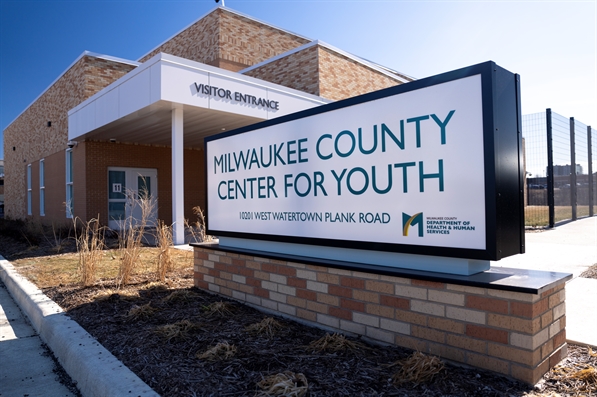
The new Milwaukee County Center for Youth offers treatment-focused care close to home.
Serving youth closer to home has been the goal of Milwaukee County’s Department of Health and Human Services (DHHS) for years. Opened in early 2026, the Milwaukee County Center for Youth (MCCY) represents a major step forward in that effort by providing a safe, positive, sustainable, and developmentally appropriate treatment environment for youth while improving the youth justice system and contributing to a safer community.
What is the Advance Peace Model?
The Advance Peace model is a violence interruption model that invests in the development, health, and well-being of people at the center of gun violence in urban communities. Advance Peace engages the small number of individuals at the center of gun violence in one-on-one, personalized fellowships to build new opportunities and break the cycle.

Seven Daily Touch Points
The program’s “7 Daily Touch Points” will provide developmental and healing resources and uplift community voice. This intervention will reduce cyclical and retaliation violence, reduce firearm-related deaths, and reduce violence rates and the cost of firearm homicides.
The centerpiece of Advance Peace is a high-touch and personalized 18-month Peacemaker Fellowship®. The Peacemaker Fellowship® is grounded in evidence-based practice and includes seven intensive daily touchpoints between program staff, volunteers, and Participating Fellows.

Milwaukee County Advance Peace Peacemaker Fellowship Highlights
- Two Cohorts
- 20 Participants per cohort
- Each cohort will run for 18 months
- Age ranges to be served, 14 to 24 years old
- All genders may be served
- The target population is high-risk individuals who are driving gun violence in Milwaukee County.

Contacts:
- Fabiana Guzmán
Advance Peace Strategy Manager
[email protected] - Vaynesia Kendrick
Program Manager, Children, Youth & Family Services
[email protected]
CYFS is very proud of our Credible Messengers Program. Credible Messengers is a mentoring program for youth in the Youth Justice System and youth in the community who may be at risk. This transformative process through which individuals from similar backgrounds, including men and women who themselves may have been justice-involved, engage youth in structured and intentional relationships and activities, provide a positive platform for youth engagement & community voice; and change agents for racial equity and policy on issues that plague the youth, families and community.
The Intake Process
Things You Need to Know About the Intake Process
- Law enforcement will bring the youth to the detention center
- They may at stay in detention or be released with an order to return
- Youth are told not to talk about their case
- Two people will be very important, your attorney and your human service worker
- The HSW serves as the front door to the process and is there to assist the family
- The first meeting the youth will have is the intake conference where they will gather facts
- The first court appearance is a temporary physical custody hearing in front of a court commissioner
At the hearing:
- The judge will talk about what conditions need to be met before the next hearing, the rights of the youth, rules, and where they are going to live
- The attorney will tell the commissioner what you want
- The HSW will make a recommendation to the Court Commissioner
- The goal of the Court Commissioner is to make things better
The Court Process
After the Intake Process and Your Appearance in Court
- At the end of intake meeting with court commission you will be assigned a court date
- In the days and weeks leading up to the court date, youth must adhere to conditions outlined at the temporary physical custody hearing. They may include:
- Don’t commit any new offenses
- Don’t leave without permission
- Don’t miss school
- There may be GPS monitoring and a curfew
- The goal of children’s court is rehabilitation and to strengthen the child, accountability and not punishment
- There are four people that play the biggest roles:
- The judge is in charge and has the final say
- The District Attorney represents the State of Wisconsin
- The attorney is the defendant’s voice, they are there to advocate for what the client wants
- Human Service Worker plays and important role—others rely on information from the HSW
- The most important person is the defendant/youth accused of a crime—even if he/she doesn’t say anything
- Tips for Success in Court
- Be respectful
- Dress nice
- Ask questions
- Feel confident knowing you’ll be treated with respect
- The most important thing is to follow the court ordered recommendations
The Final Disposition Process
Court Proceedings and the Disposition
- The judge will consider all the information and order a judgment which is called a disposition, same as a sentence
- The judge’s decision relies heavily on what the Human Service Worker says
- The information provided to the attorney and human service worker must be honest
- Finding the way forward is to have a good relationship with the HSW
- The judge takes multiple factors into consideration:
- What are the youth’s risk factors?
- Do they have mental health or substance use disorder needs?
- Is there supportive family or other relationships to support them?
- The judge’s goal is to have a custom made plan in place that supports the youth and ensures they don’t come back

Our Goals
CYFS aims to facilitate positive youth identity development by identifying their strengths, assisting them in exploring a positive future, and supporting them in achieving their goals. Our goal is to enhance the following skills with our youth:
- Critical thinking
- Self-regulation
- Problem-solving
- Mindfulness
- Goal setting
- Interpersonal relationships
- Enhancing caregiver confidence
By focusing on mental wellness, healing-focused care, alternatives to out-of-home placements, data-driven programming, and integrative approaches that involve all the tools available to DHHS, youth are developing tools and strategies to help them succeed and return to supportive homes and stronger communities.

Our Human Service Workers
Youth justice service workers provide support and advocacy to youth and families during their involvement with CYFS. Service workers assist the youth and family through this process by maintaining consistent contact, monitoring youth progress in programs and services, providing updates to the court, monitoring accountability with court orders, assessing needs with services and supports, and celebrating successes. Service workers are trained to use a developmental approach, Growth Focused Case Management, to youth justice with an aim of facilitating youth growth to positive adulthood. The needs of our young people are addressed through these intentional experiences:
- Fostering exploration of a positive future
- Identifying strengths
- Working with young people to identify their goals
- Helping young people pursue those goals
Our Community Network of Providers
CYFS helps youth and families involved in the justice system as soon as they enter. We can provide services while youth await the judge's decision and court outcome, while they are on supervision with the courts, as well as connect them to resources that they can maintain when they are no longer in our care.
Our community network of providers make it possible for us to offer the array of services identified below.

Programs and Services
- Capias Abatement
- Community Service Coordination
- Education Restoration and Support Services (i.e., Competency Restoration, Driver's Ed., Tutoring)
- Global Positioning Systems and Intensive Monitoring
- Mentoring
- Parent Advocacy
- Restorative Justice
- Sexualized Behavior Services
- Skill Building Groups
- Clinical Therapeutic Services: Assessments, Alcohol & Other Drug Abuse Services, Individual, Family and Group Therapy
- Youth Employment
Out of Home
Placements in temporary shelter, group homes, foster care and residential treatment care as deemed appropriate.
System of Care Services
Eligible services available through our system of care:
- Children's Community Mental Health Services and Wraparound Milwaukee
- Comprehensive Community Services
- Birth to 3
- Children's Long-Term Support
- Children's Community Options Program
Our Champions Make Change Program
The Champion's Make Change program exists to provide a dispositional placement alternative to Department of Corrections Division of Juvenile Justice Corrections placement for the circuit courts.
This alternative placement has been intentionally re-designed to provide a comprehensive dialectical behavior therapy informed environment that is built on the foundation of five key components:
- Imparting skill
- Acknowledging harm of racial injustice and promoting healing
- Increasing adolescent growth and brain development
- Using restorative practices
- Involving continuous family inclusion
Visit Us
Children, Youth and Family Services
10201 W Watertown Plank Rd, Wauwatosa, WI 53226
Talk to Us
24-Hour Detention Line
Administrative Contact
 |
Kelly Pethke Administrator, Children, Youth & Family Services |