


Programs & Services
Energy & Climate
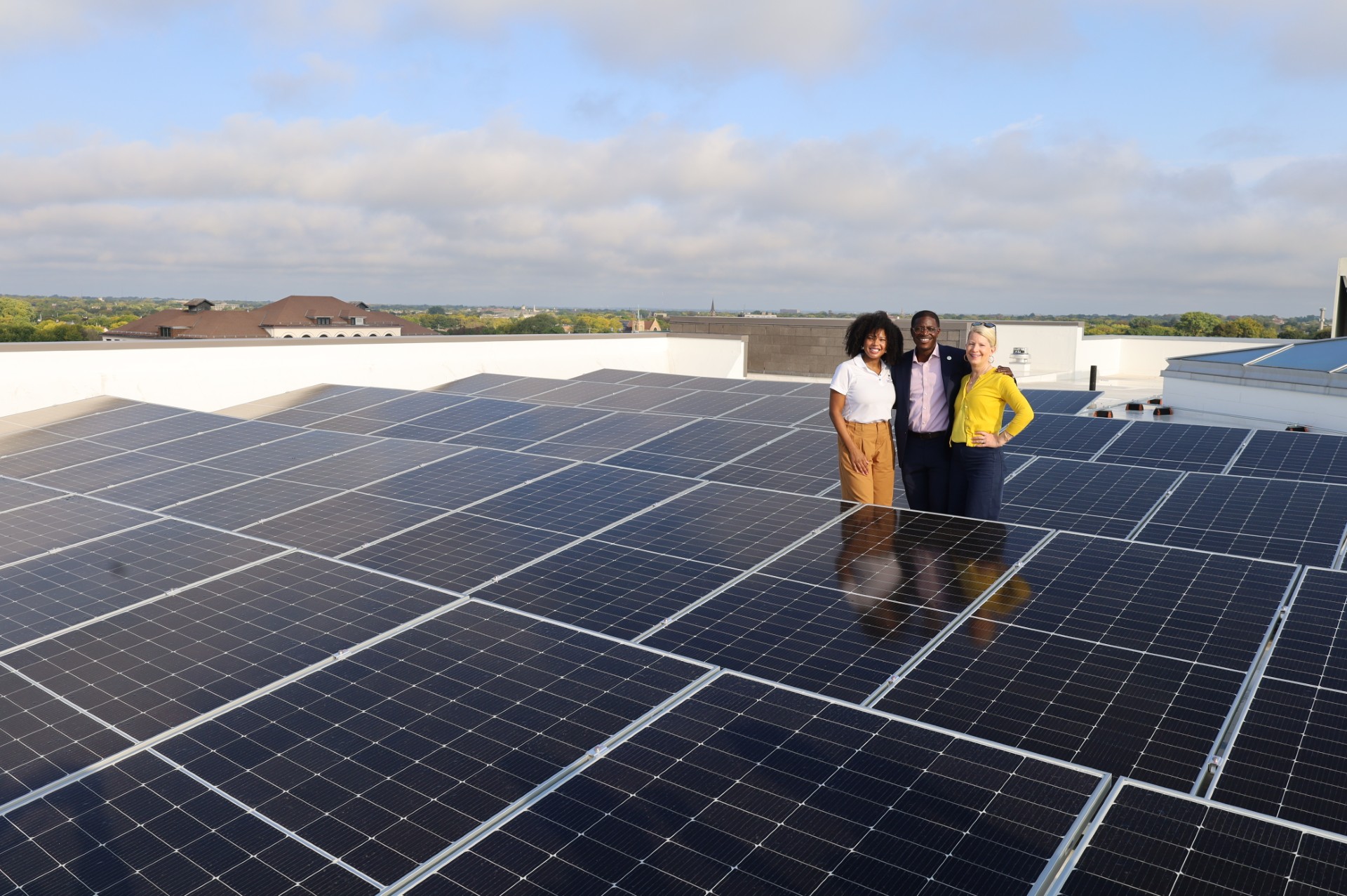
Milwaukee County is committed to supporting the Paris Climate Agreement and achieving zero net carbon emissions by 2050. The Office of Sustainability is actively working to reduce energy use and carbon emissions from Milwaukee County government operations. Although much work remains to be done, energy conservation, efficiency, and switching to cleaner energy have lowered the County's emissions by approximately 48% since 2005.
In 2020, the Office of Sustainability completed the first-ever inventories of Milwaukee County government emissions and communitywide emissions, and we launched a retro-commissioning program to improve energy efficiency and occupant comfort in county buildings. During 2022, we secured federal ARPA funding to develop the Climate Action 2050 Plan for county operations, currently underway.
View Milwaukee County's Energy Dashboard

Green Jobs
The Office of Sustainability is excited about the recent launch of an innovative, $1.9 million ARPA-funded program to improve the efficiency of Milwaukee County buildings while creating career pathways for area youth. Started in January 2024, the Lighting Jobs Program is providing training and on-site job experiences for Milwaukee County high school students who are interested in careers in the skilled trades. Students selected for the program work closely with Milwaukee County staff and contractor Allcon, LLC to assist with interior lighting upgrade in county buildings. The program aims to not only save energy and reduce emissions, but also to dismantle barriers to entering the trades - particularly for low- to moderate-income households, women, and Black, Indigenous, and other People of Color (BIPOC) communities.

Economic Development
In 2018, Milwaukee County joined PACE Wisconsin, a statewide program that helps commercial property owners to obtain low-cost, long-term, private loans for energy efficiency, renewable energy and water conservation improvements. Administered through the Wisconsin PACE Commission, the voluntary program helps boost the efficiency and sustainability of commercial buildings at no cost to taxpayers. As of October 2023, the program has provided $14,963,032 in private financing to a variety of development projects in Milwaukee County. In addition to boosting property values, these projects have created around 225 jobs and provide a lifetime environmental benefit equivalent to removing 6,000 passenger vehicles from the road for a year

Resource Management
Solid waste diversion conserves natural resources, reduces pollution, and supports approximately 97,000 jobs in Wisconsin (source: Recycle More Wisconsin). The Office of Sustainability strives to reduce, reuse, or recycle solid waste generated from Milwaukee County operations. We work with Architecture, Engineering, and Environmental Services to achieve 50 percent or greater waste diversion for the County’s new construction and major renovation projects. During 2019, we coordinated development of a waste minimization plan for Milwaukee Mitchell International Airport. In 2022, per the County Board's request, we developed a new administrative policy to reduce and eliminate single-use plastic products and polystyrene from Milwaukee County properties. Effective Jan. 1, 2023, all new or renewed county contracts incorporate contract language that requires vendors to adhere to this policy.

Strategic Planning
The Office of Sustainability collaborates with Milwaukee County departments to incorporate economic, social and environmental sustainability into their planning. In 2016, we helped the Milwaukee County Zoo develop a Clean Energy Plan. The plan sets goals and provides actions the Zoo can take to reduce its energy and water use while increasing its use of renewable energy. We serve as a resource to Milwaukee Mitchell International Airport as it implements a Sustainability Management Plan for airport operations. The plan supports the "quadruple-bottom line" of the airport: economic viability, operational efficiency, natural resource conservation and social responsibility.