


Environmental Services
Ensuring Environmental Sustainability in Our Infrastructure and Natural Resources

Who We Are
Milwaukee County Environmental Services provides technical and managerial services concerning environmental and sustainability issues for Milwaukee County’s building and infrastructure assets and natural resources.
We provide guidance and expertise to Milwaukee County Departments in the following areas:
- Green building concepts
- Environmental due-diligence for property acquisition and disposal
- Procurement of grant funding
- Stormwater management
- Land and water conservation
- Hazardous substance control (asbestos, lead, PCBs, mercury, pesticides/herbicides)
- Underground storage tanks
- Landfills
- Air quality
- Recycling
- Solid waste
- Water quality
- Brownfields and contaminated properties
- Shoreline/streambank
Contact Us

Underground Storage Tank Removal

Flowering Rain Garden in Washington Park
Stormwater
We are Milwaukee County's authority on stormwater management. We administer the County’s stormwater permit and oversee the installation of award-winning best management practices such as the infiltration basins at Bradford Beach and permeable pavers at the Franklin Sports Complex.
Spotlight: Oak Creek Streambank Stabilization

In 2022, Senior Environmental Engineer Jack Sudar completed a project stabilizing a stretch of the Oak Creek. See his write up of the project, as well as the full 2022 Wisconsin Report on Soil and Water Conservation.
Pond and Lagoon

Bank Stabilization at Dineen Park
Milwaukee County owns and maintains over 70 ponds and lagoons. In response to concerns over water quality in these water bodies, Environmental Services developed the Milwaukee County Pond and Lagoon Management Plan to assess the environmental quality of the lagoons and recommend improvements. The effort included several pilot projects focusing on bank stabilization and native plant installations on several ponds.
Solar Power
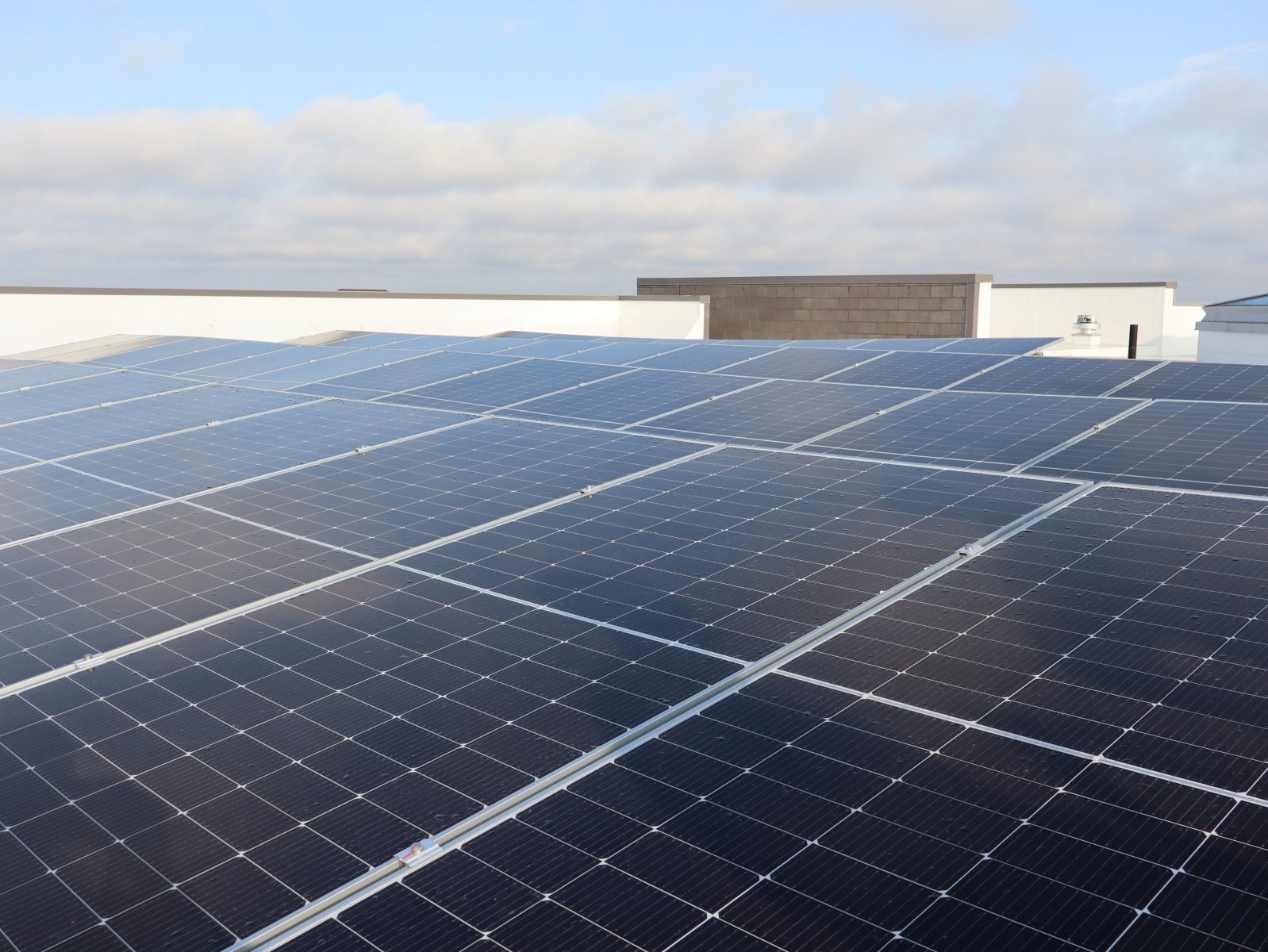
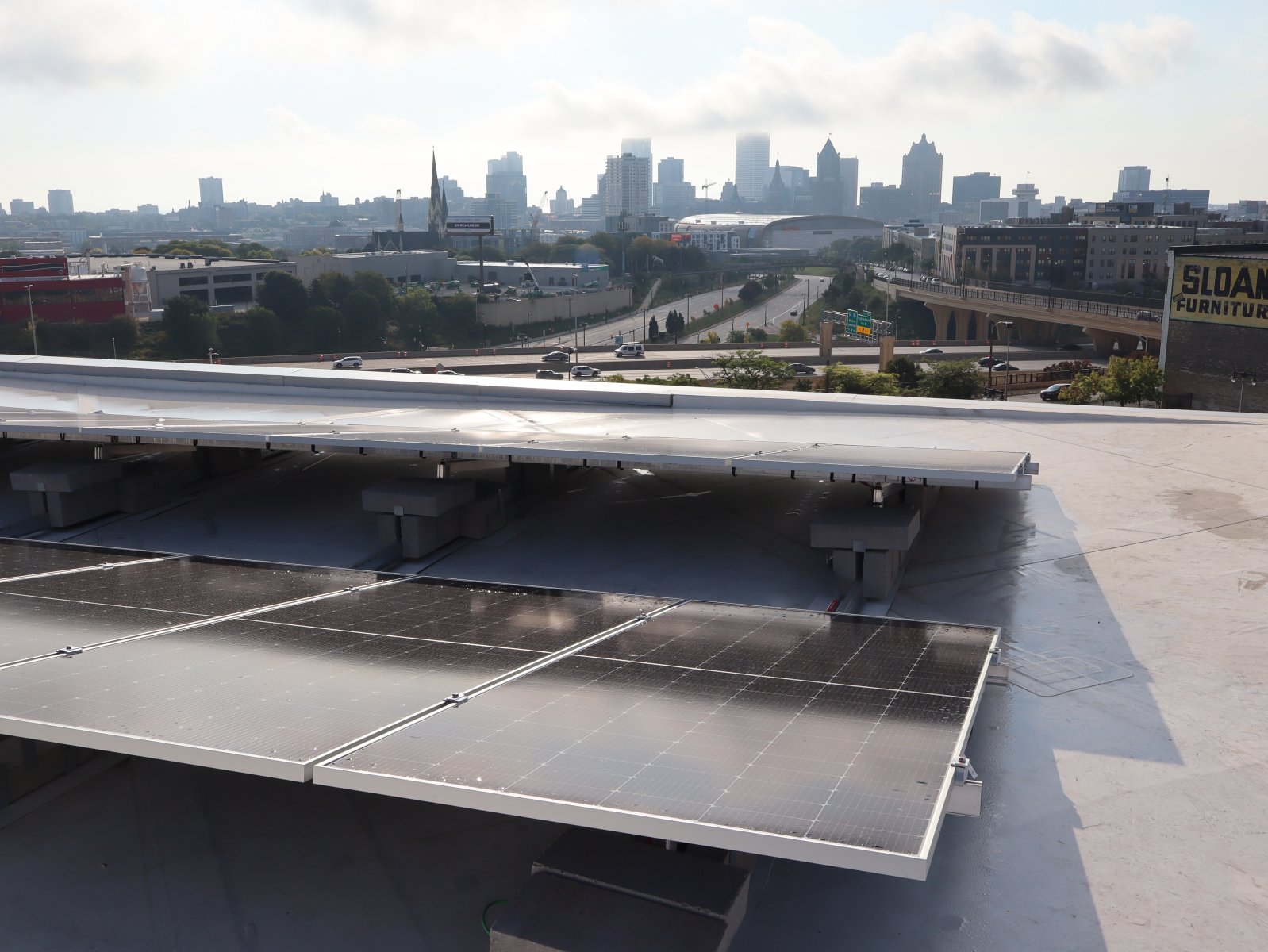
Solar Panels on the Marcia P. Coggs Health and Human Serives Center
Installed in August 2025, the Marcia P. Coggs Health and Human Services Center includes a 50kW bifacial solar PV system. The 86 solar panels will offset more than 11% of the buildings energy consumption.
Land Conservation
We also serve as the Land Conservation Department. Our primary functions are to develop and implement the Milwaukee County Land and Water Resource Management Plan and administer grants to landowners to help reduce soil erosion, manage nutrients, and minimize pollution of surface and groundwater.
Land and Water Resource Management Plan
Land and water resource plans are developed to identify, prioritize and address land- and water-related resource conservation issues in the County. Plan goals include:
- Improve water quality through the reduction of sediment and nutrient delivery to surface waters in Milwaukee County
- Protect, maintain and restore land and water resources in Milwaukee County
- Enhance Lake Michigan bluff protection initiatives
- Maintain the existing information network and land information web portal
- Limit the introduction and reduce the spread of invasive species in Milwaukee County
Grants to Landowners
Milwaukee County offers grants to landowners to help with the costs of installing conservation practices. These grants can help pay up to 70% of the cost for installing conservation practices such as cover crops, streambank protection and filter strips.
For more detailed information, see Subchapter V, Cost-Share Grants to Land Owners of Chapter ATCP 50 of the Wisconsin Admisitrative Code or contact us.
Contact [email protected] with any questions.
Sanitary Sewer CMOM Program
What Is CMOM?
The general purpose of Milwaukee County's Capacity, Management, Operation and Maintenance (CMOM) program is to assist in reducing sanitary sewer overflows.
How the CMOM Program Came About
When combined sewer overflows and sanitary sewer overflows occur, they present important concerns for public health and the environment. The Milwaukee Metropolitan Sewerage District (MMSD) has been working to reduce the amount of overflows that occur for decades. In 2002, MMSD was required to implement an ongoing CMOM program as a part of a stipulation agreement with the State of Wisconsin’s Department of Natural Resources. Part of MMSD’s CMOM plan is to open and maintain dialog with the 29 satellite municipalities in developing their own individual CMOM programs. Milwaukee County is one of those municipalities that are required to maintain a CMOM program.
Milwaukee County’s Sanitary Sewer System
Milwaukee County is unique in that, unlike other municipalities, its sewers are spread out throughout the entire County. Milwaukee County has sanitary sewers in the following locations: County Parks, Airports, Milwaukee County Transit System (MCTS) facilities, County Grounds, Milwaukee County Zoo, and the County Correctional Facility South. In total, Milwaukee County has approximately 1,000 sanitary sewer manholes and 225,000 linear feet of sanitary sewer.
Milwaukee County’s CMOM Program
Milwaukee County started its CMOM program in 2007. It consists of a written plan directed at reducing sanitary sewer overflows through stated goals and objectives, and it also lists the strategies and tactics that will be employed to achieve the goals. An important part of the CMOM is the Overflow Response Plan, which lists the correct actions to take if a sanitary sewer overflow or SSO occurs.
Milwaukee County’s CMOM Reports
Fats, Oils and Grease (F.O.G.) Flyers (English and Spanish)
MMSD's CMOM Program Information