



MILWAUKEE COUNTY
2027 BUDGET LISTENING SESSIONS
Milwaukee County's annual budget represents our plan for how we'll fund services next year — from public transit and parks to mental health services and affordable housing.
Building this budget means making tough choices. In recent years, we've worked to fix long-standing financial problems, bring in new revenue, and find innovative and efficient ways to deliver services countywide. Passing Wisconsin Act 12 in 2023 was a big part of that, helping to generate additional sales tax revenue and address the costly pension debt that was draining county finances. Prior to implementation Act 12, the county was projected to face a $109 million deficit by 2028, but because of this historic action, the structural imbalance has been reduced and we’ve ended every single year with a budget surplus.
Still, challenges remain. Inflation is driving up everyday costs nationwide. State-mandated services, which already consume the majority of our tax levy, keep getting more expensive. Changes in state and federal politics are making grant funding harder to predict. And we still have a backlog of overdue building and infrastructure repairs to tackle. Despite these challenges, Milwaukee County’s priority stays the same: Protect the services residents count on every day by making fiscally responsible decisions.
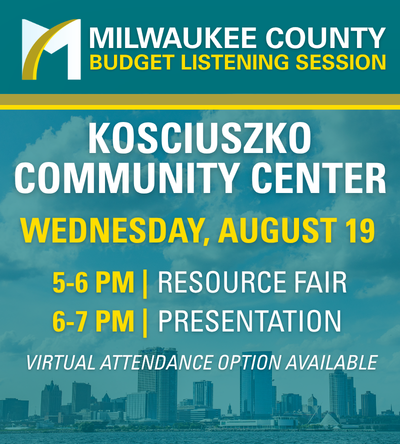
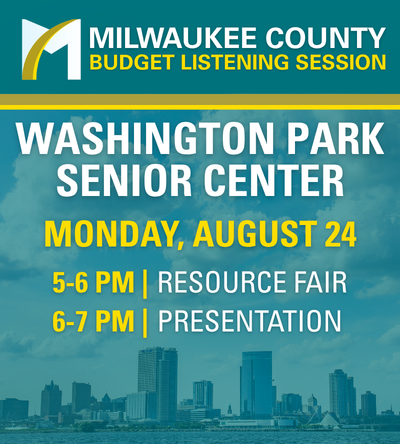
In order to move forward, we need your input. Milwaukee County is hosting two public listening sessions for residents. Each event starts with a resource fair featuring Milwaukee County departments and programs, followed by a presentation on the County's budget priorities and a chance to share your thoughts on where funding should go in 2027. Register to attend below.
2027 Public Budget Listening Sessions
Helpful Terms
County budget conversations come with a lot of specialized language. This section breaks down some of the most commonly used budget terms in plain language, so you can better understand how Milwaukee County funds the services you rely on every day.
State-Mandated Services
These are services Milwaukee County is required by state law to provide. They're not optional, even when the state doesn't fully pay for them. Because state-mandated services come with legal obligations, the county has to fund them first. Every year, a significant portion of the County budget goes toward services the state requires us to deliver, such as:
- Court services
- Community corrections and justice programs
- Freeway patrol
- Child support services
- Behavioral health services
- Veterans’ Services
Non-Mandated Services
These are services Milwaukee County provides to improve residents’ quality of life but are not required by state law. Non-mandated compete for the remaining funding after mandated services are covered. That's part of why parks maintenance backlogs and transit funding show up so often in county budget conversations: they're essential to community life, but they don't have the same legal protection as mandated services.
Examples of non-mandated services include:
- Parks, pools, beaches, and recreational programming
- Public transit (MCTS)
- Cultural and arts venues
- Violence prevention efforts
Operating Budget
This funds the day-to-day cost of running county government: staff salaries, supplies, utilities, and the ongoing programs residents rely on year-round.
Capital Budget
This funds big, one-time investments in physical infrastructure: buildings, equipment, roads, and major repairs. These types of projects are planned years in advance and often paid for over time through bonding.
Debt Service Reserve
The Debt Service Reserve (DSR) is Milwaukee County's rainy-day fund. These are savings the county has built up that can be tapped in tough years to help balance the budget without cutting services or raising taxes as sharply. Under state law, those funds can only be used for a few specific purposes: reducing taxpayer cost for debt service, providing cash financing for one-time capital projects or one-time operating items, financing debt refinancing when advantageous, or responding to emergencies.
Structural Imbalance
This phrase describes Milwaukee County’s financial challenge: revenue is not keeping up with increasing costs over each year. This means the County has to reduce spending just to maintain. It’s like trying to balance a household budget when grocery prices go up and your pay does not. You have to make do with less.
Property Tax Levy
This is the amount of money the county collects from property owners each year to help fund the budget.
Sales Tax
Since 2024, Milwaukee County has collected an additional 0.4% sales tax, authorized under the 2023 Wisconsin Act 12 reforms, to help put the county's finances on more stable footing for the future. By state law, this tax revenue can only be used for one thing: pension costs. That includes paying off older pension debt (called "unfunded liability"), covering payments on bonds tied to that debt, and funding the pension system going forward.
State Shared Revenue
This is money the state sends back to the county from taxes Milwaukee County residents and businesses already paid to the state.
State Aid
Separate from shared revenue, this includes targeted state payments for specific purposes or aid tied to specific programs.
User Fees and Rentals
These are fees residents and users pay directly for specific services, such as park rentals, pool admission, transit fares, or Register of Deeds filing fees.
Vehicle Registration Fee (VRF)
This fee is the fee you pay to register your car, motorcycle, or other vehicles. It is one of the few tools the state grants Milwaukee County to raise revenue. It must be used for transit and transportation related costs.
Bonding
Bonding is how the county borrows money to pay for large capital projects (buildings, major infrastructure) upfront, then pays it back over time with interest. This is standard practice for governments funding expensive, long-term investments rather than paying the full cost in a single year.
Federal Funding
One-time or program-specific federal dollars, like the American Rescue Plan Act (ARPA) funds the county received during COVID-19. These funds have been especially important for propping up areas like transit, but they're temporary funding solutions.
Milwaukee County Services vs. City/Municipality Services
Milwaukee County and the City of Milwaukee (plus the county's 18 other municipalities — villages and cities) are two separate layers of government with different jobs.
Services run by Milwaukee County:
- County Courts
- County highways
- County parks, pools, trails, cultural institutions
- Health & Human Services, such as Aging, Behavioral Health, Disabilities Services, Housing Services, Youth & Family Services, and Veterans' Services
- Medical Examiner
- Milwaukee County Jail and Community Reintegration Center (formerly House of Corrections)
- Milwaukee County Sheriff's Office
- MCSO's primary role is different from city police: patrolling county parks, the courthouse, county highways, and the entire freeway system within the County
- Milwaukee County Transit System
- Milwaukee Mitchell International Airport
Services run by municipalities:
- Police protection
- Fire protection
- Local street maintenance
- Water and sewer utilities
- Local zoning and building permits
- Trash and recycling pickup